
Sustainable Spatial Design for Short-Stay Accommodation Pods
Context:
To support the growth of Singapore’s eco-tourism sector and encourage off-the-grid staycation experiences, the Singapore Tourism Board (STB) designated a site at Hampstead Gardens for a sustainability-focused, cyclist-friendly accommodation concept.
The proposal consists of seven modular pods adapted from shipping containers — six accommodation units and one shared service pod housing reception, food & beverage, retail, and leisure functions.
My Role: Spatial Planning | Layout Design | Concept Development
Key Focus: User Flow | Privacy vs Community | Compact Living
Problem & Intent
- Design space-efficient yet sustainable short-stay accommodations
- Integrate cyclist-friendly amenities into the spatial layout
- Balance private living spaces with communal shared areas
- Transform the industrial interior of shipping containers into a warm, homely environment
- Encourage casual social interaction through spatial planning and shared facilities
Spatial Thinking & Process
Understanding The Site
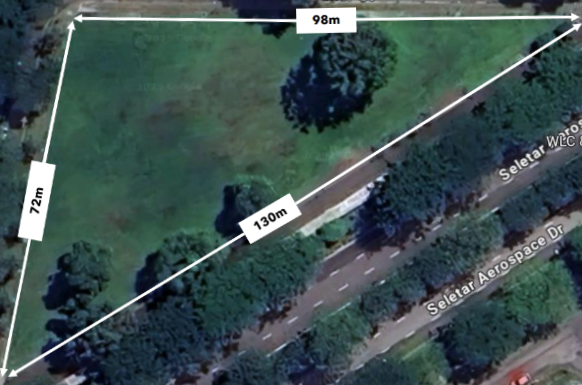
Constraints:
- Unconventional land shape.
- Private & public zones requires separation
- Location is adjacent to roadway
Considerations:
- Unit arrangements can follow along perimeter of the land.
- Structural additions can be used to separate different zones.
- Noise Buffers
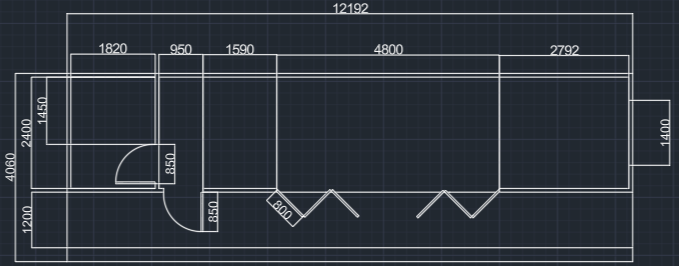
Pod Context & Constraints:
- Small living area given
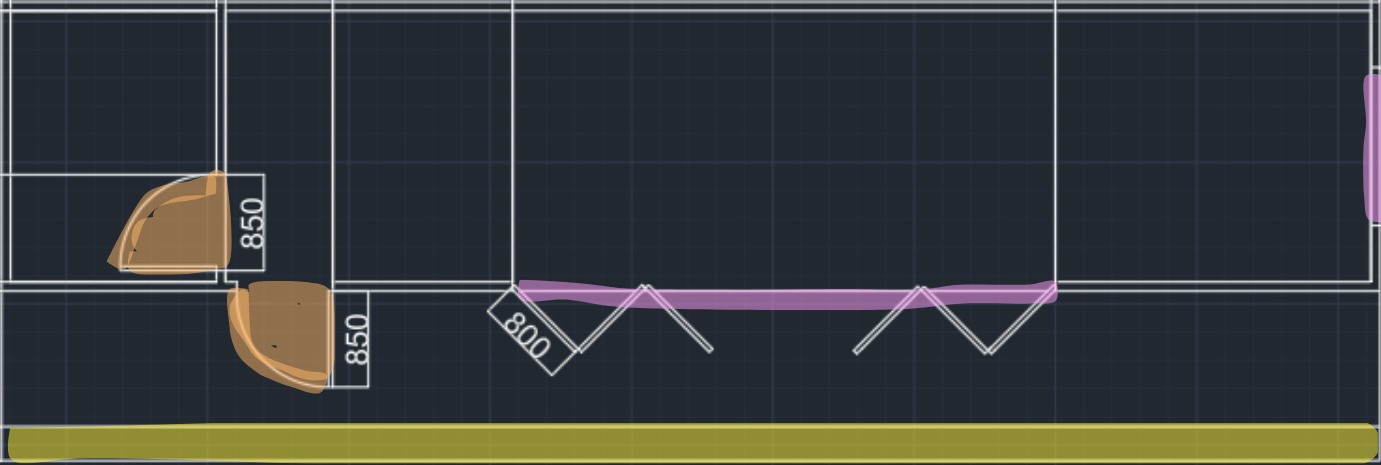
- Swinging doors are provided instead of sliding doors, which is inefficient due to lack of space.
- Minimal windows so natural lighting will be sparse.
Considerations:
- Optimize spatial patterns for space.
- Avoid door trajectory when designing.
- Avoid putting up unintentional blockages against the natural lighting.
Defining Spatial Relationships
Service Pods [Adjacency Maps + Bubble Diagram]
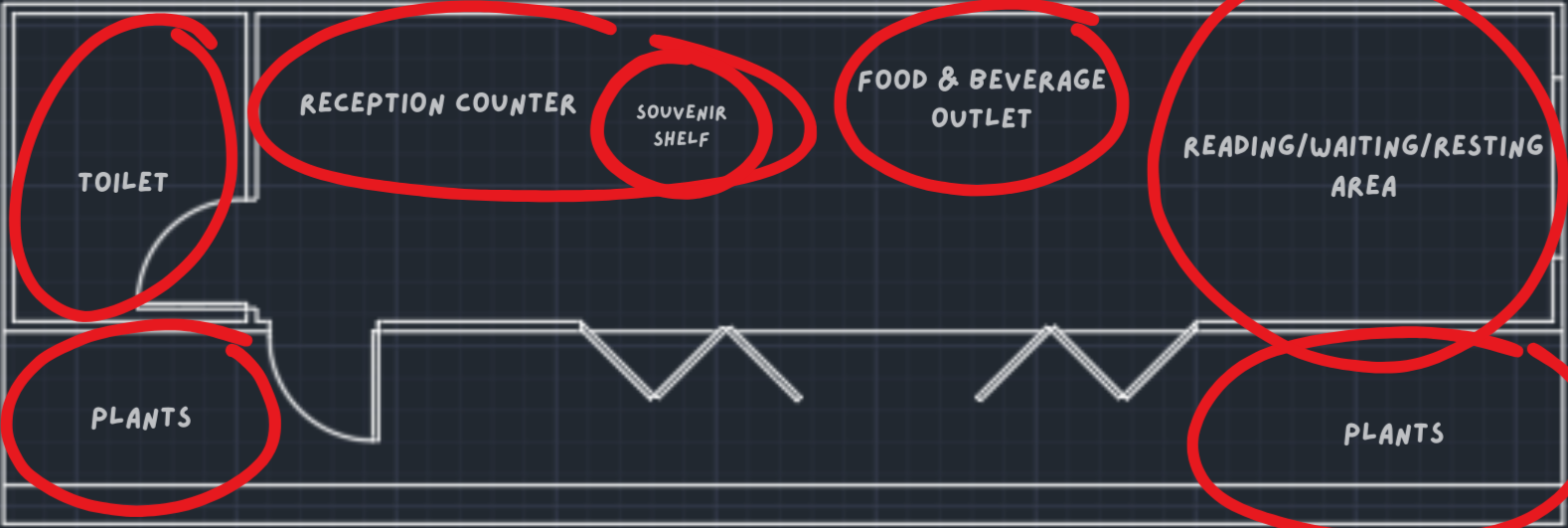
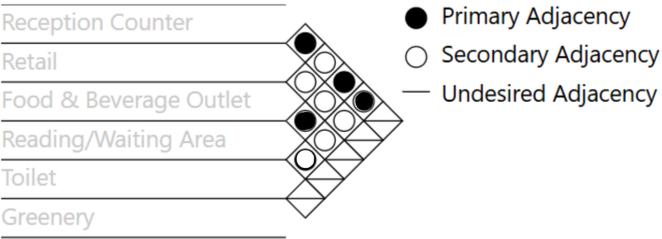
- Reception counter is the first channel of communication between patrons and staff. It is strategically placed in front of the entrance to encourage the first interaction.
- Reading & resting area is positioned away from high-traffic areas (reception), promoting a calmer atmosphere for patrons resting there.
- For waiting patrons, food & beverages should be available nearby in consideration of their hunger during busy periods.
- The toilet is placed close by the entrance to prioritize convenience of toilet usage among patrons entering the room.
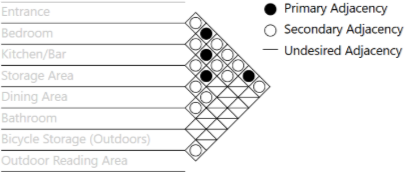
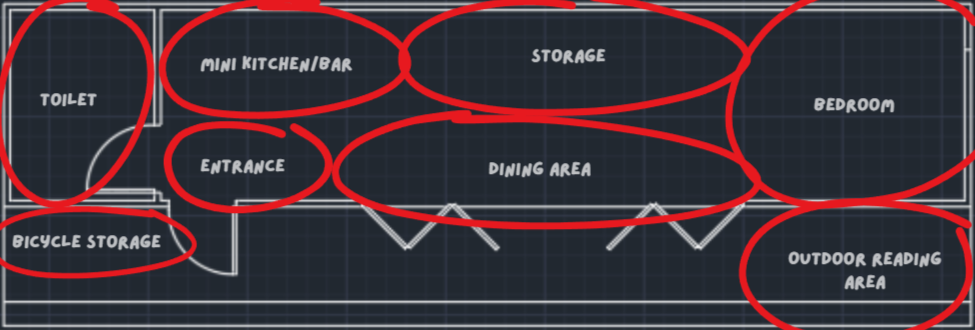
- Imitating a studio apartment, the kitchen is placed in front of the entrance to maximize space.
- Dining area is adjacent to the kitchen area so there's ease of reach between cooking and eating activities.
- Bedroom is located beside a window, allowing natural airflow and lighting for a comfortable living space.
- To support the leisure activities of patrons, a reading area uses the space outside utilizing the natural landscapes as its backdrop.
- Keeping in mind to make the user experience cyclist-friendly, a space is cleared beside the entrance to give cyclists a designated area for bicycle parking.
Accommodation Pods [Adjacency Maps + Bubble Diagram]
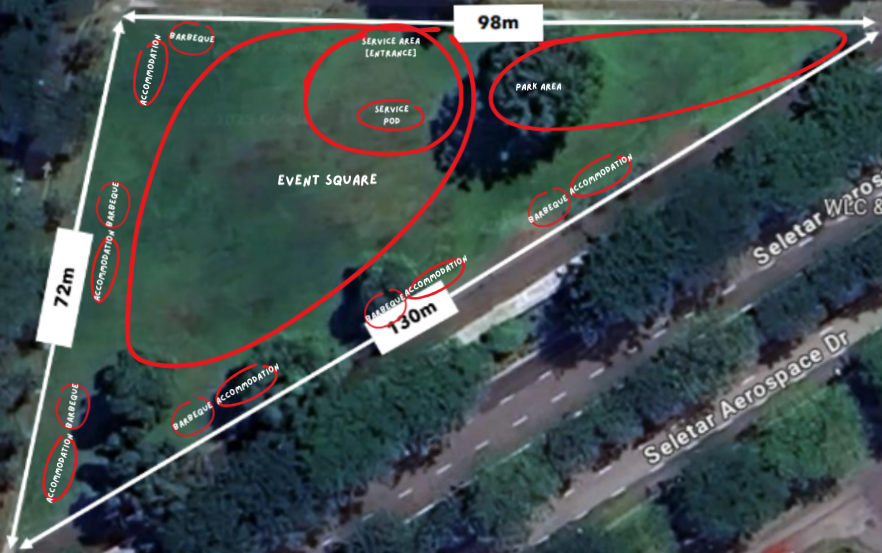
- To increase socializing among patrons, one main event square is built to act as the main connector between each accommodation pod.
- The service pod is located at the most visible part of the land among all accommodation pods. This'll allow patrons to see the space's layout when they step in for check-in.
- One third of the natural land is left untouched in consideration of building a cyclist pathway alongside nature. This contributes to cyclist-friendly interactions
- One barbeque pit is provided for each housing unit, supporting lifestyle among the nature while allowing patrons to socialize over barbequing.
Final Spatial Solutions
Final Layouts - AutoCad
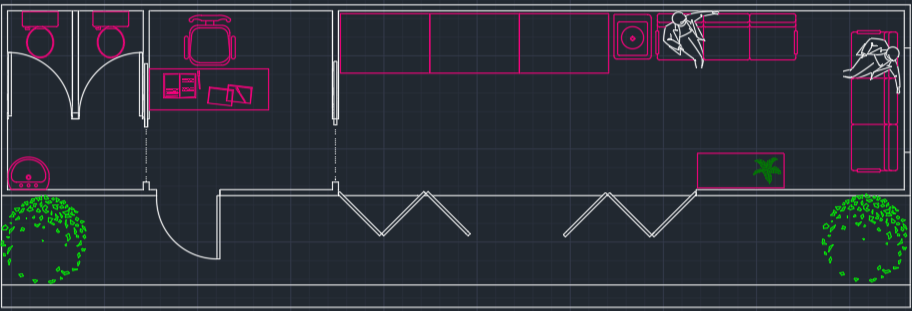
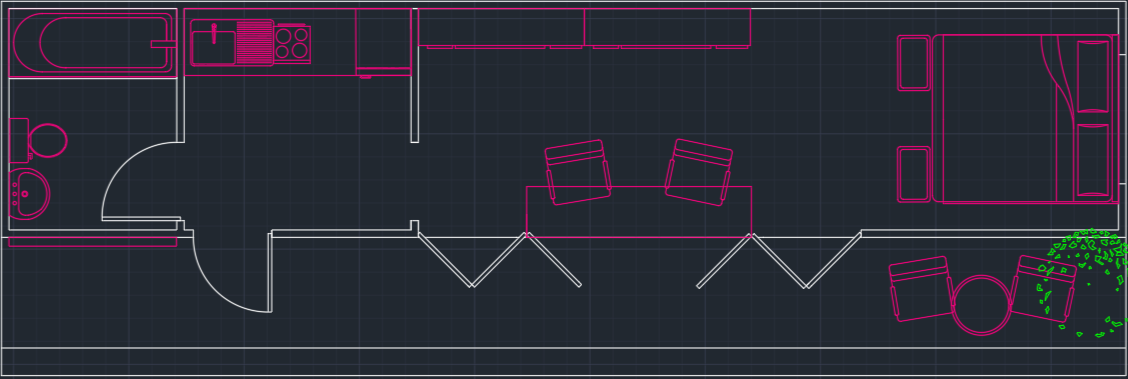
Final Spatial Resolutions
The final layouts combine previous plannings into a compact yet functional space that balances efficiency, user comfort, and program clarity.
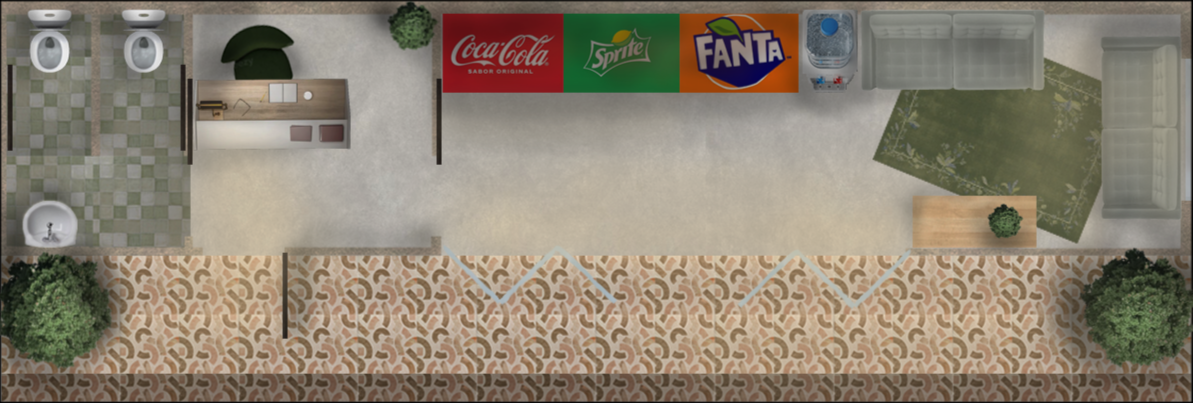
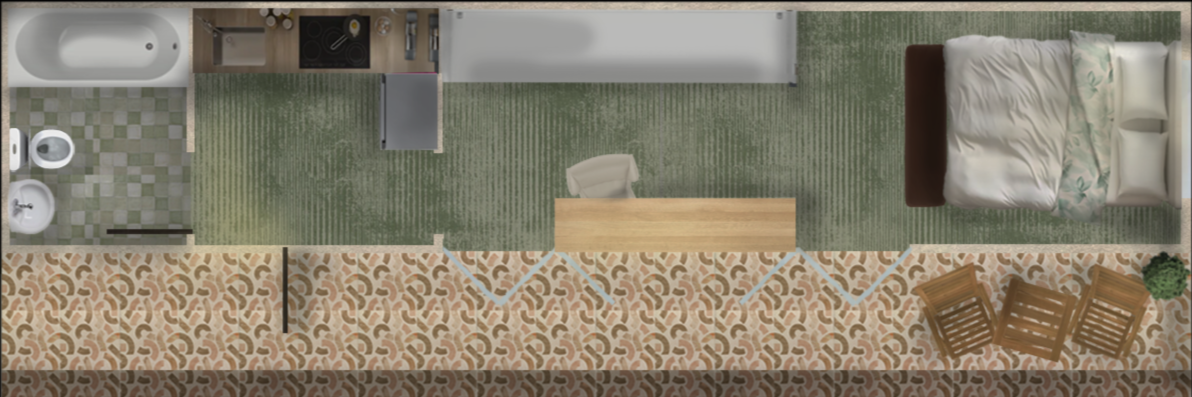
Key Spatial Moments:
Accommodation Pod: Resting & Service areas are kept away to reduce visual disturbance. Areas are easily differentiable from design aspects like wall separation & flooring types.
Service Pod: Facility arrangement supports intuitive movement, from Entry > Reception > Service > Waiting.
Final Render of Overall Location
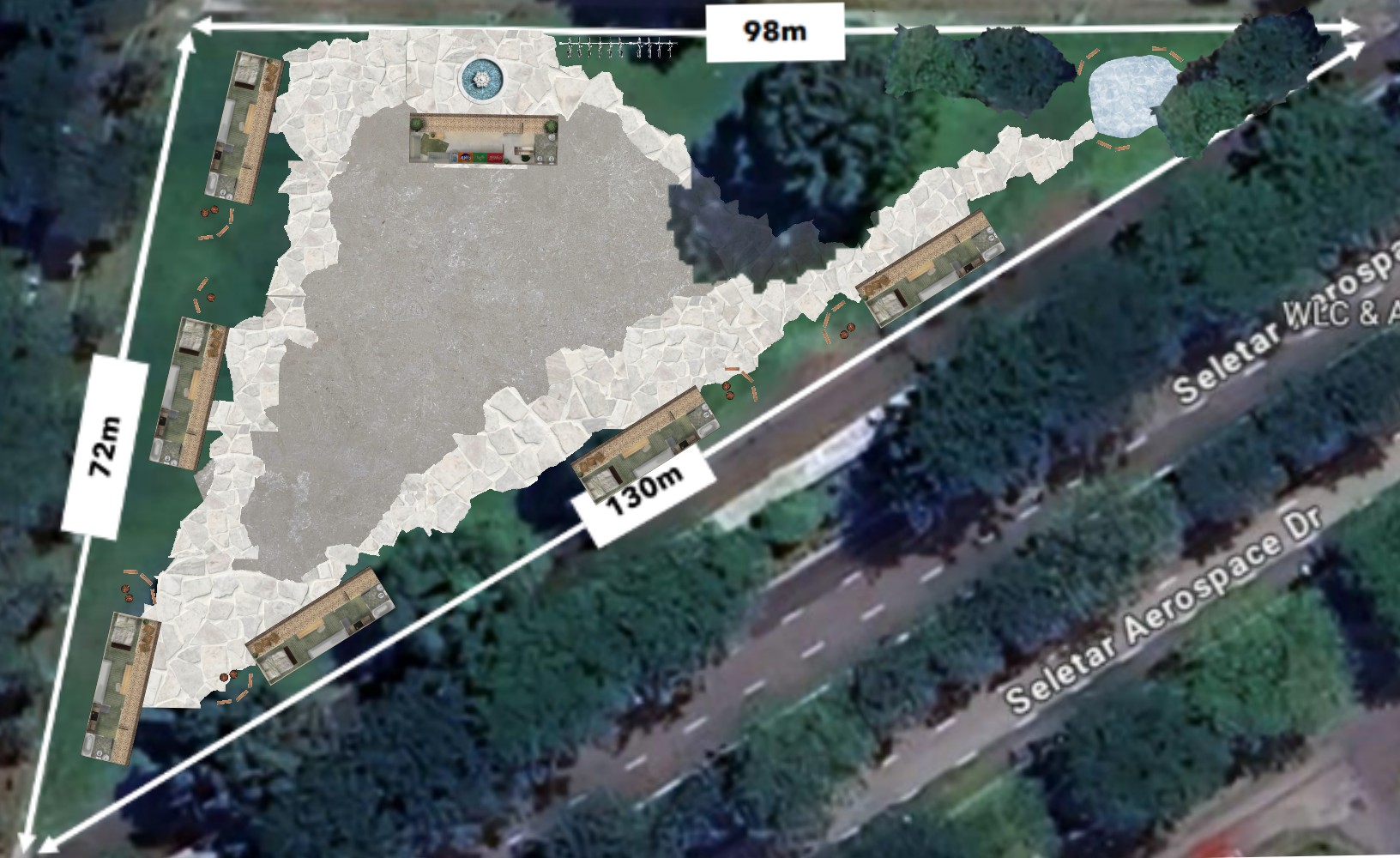
Key Spatial Moments:
- Outdoor seating encourages rest and social interactions among patrons.
- Clear pathways to lead patrons to specifies park facilities.